
Add view

Incentive
KitKat is part of a pioneering program
The Nestlé income accelerator builds on the Nestlé Cocoa Plan, launched in 2009, and more than 15 years of experience supporting cocoa-farming families and the environments in which they operate.

Good Agricultural Practices
The Journey Behind Your Chocolate: Introducing the Nestlé Cocoa Plan
The Nestlé Cocoa Plan was launched in 2009 and now counts more than 15 years of experience in the field. So far, the program has engaged with over 175 000 farmers in 11 origin countries, covering more than 300,000 tons of cocoa in 2025.
Good Agricultural Practices
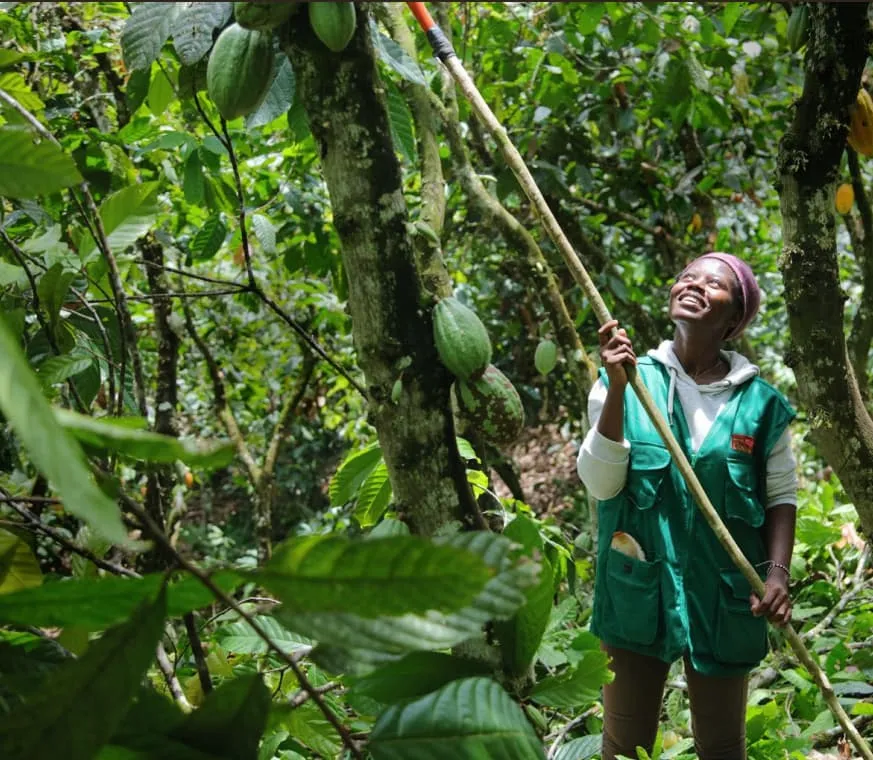
Pruning And Sustainable Cocoa Production
Selectively pruning degraded and diseased branches can help improve overall yield and quality of cocoa pods from older trees. By promoting pruning, farmers can divesify incomes while limiting crop disease and loss, to great effect.

Empowerment femminile
Empowering Women To Drive Income Diversification
Enrolling children from 6-16 years old into school is one of the central incentive pillars of the Income Accelerator Program. By helping women get their children to school, we can ensure incentives payments are used to fund what matters the most.

Good Agricultural Practices
Farmer Training Program
Engagement with farmers is a key pillar of the Nestlé Cocoa Plan. We work directly with them to address gaps in their knowledge on a wide range of subjects, helping to improve safety, health and livelihoods.

Diversified Income
The Benefits of Beekeeping
Work can be seasonal for cocoa farmers in West Africa, with incomes slowing down outside of harvest periods. Beekeeping can give communities a low-space and low-expense source of additional income.